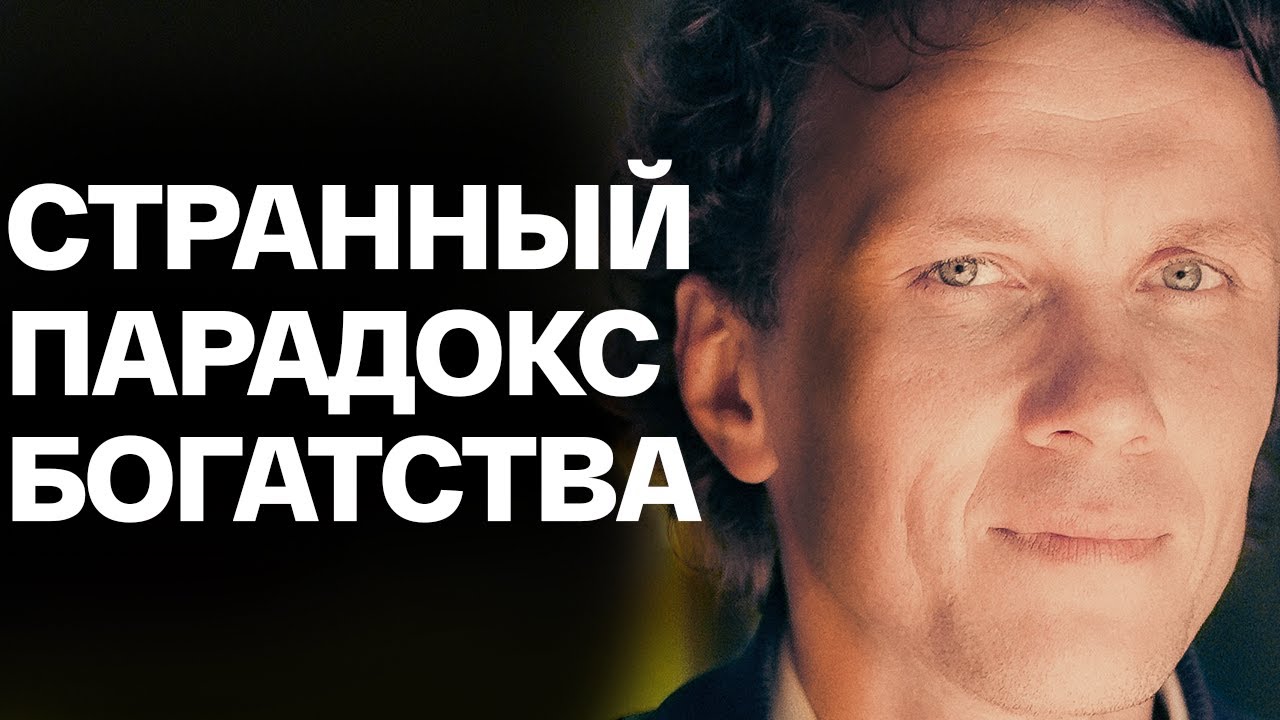
VideoPersonal developmentJan 21, 202626:38
How to Leave the Rat Race and Earn More: The Psychology of Money
Alexander Volchek
Why do some people live in constant tension over money, even when they earn it, while others feel inner stability and grow more strongly because of it?
Main subjects
Alexander VolchekMoney, anxiety, and financial thinkingKarma, free will, and causalityFocusing on income growthAnxiety, stress, and inner calmKarma
The main question
Why do some people live in constant tension over money, even when they earn it, while others feel inner stability and grow more strongly because of it?
What you can take away
- We discuss how money comes for different reasons, many of which cannot be controlled directly.
- We examine two main causes of money—karma and work—and how space, the people around us, family, and inner distress affect a person's financial reality.
Main threads of the conversation
- 00:00Teaser
- 00:50An exercise about money
- 01:28What this episode covers: money, fear, and perception
- 02:04What influences whether money is present and comes into a person's life?
- 5:121. Karmic reasons for large amounts of money
- 8:39How space influences money
- 10:302. Money from work as a source of stability
- 14:00Why work provides money throughout life
- 14:42Fears about money: what to do
- 16:59The most important thing to understand about money
- 18:303. The influence of country and region on money
- 20:46How to grow your earnings and money: an exercise
- 23:56How to remove distress about money: an exercise
Claims made here
Individual claims identified in the material: who said them, when, and what kind of thought they express. Each timestamp opens that point in the video.
- 01:50
On the other hand, I do everything I can to provide material and teach so that everyone can live at their maximum level, avoid missing opportunities, and not feel bad when something does not work out.
Alexander Volchekrecommendationcomparison
- 04:44
At moments like that, I always remember my business partner Andrey Rogachev, who created Pyaterochka. He used to say, "Conversion is 97 percent."
Alexander Volchekprinciple
- 05:03
To show that there are different reasons for a person having or not having money, and that the more broadly we study these people in terms of different causes, the more we will see the probability decrease.
Alexander Volchekcomparisonprinciple
- 05:48
One of the biggest mistakes about the karmic cause of a person's wealth—one of the biggest mistakes—is when someone suddenly earns a great deal of money, associates that with their good karma, and says, "Look how good I am. I have earned so much money."
Alexander Volchekprinciple
- 06:45
Where is the error in thinking when someone says, "I do good deeds, and I have money"?
Alexander Volchekcomparison
- 08:40
There is a big difference between living in Minsk, Moscow, New York, Smolensk, or Borisov.
Alexander Volchekcomparison
- 15:22
You need to remember and be very careful: if there are any patterns of disorientation around money, fear about money, greed, a desire for power through money, or manipulation around money, always remember that this…
Alexander Volchek
- 18:14
So here is a very important point. Very important: understand that karma and work do not necessarily bring money.
Alexander Volchekcause
- 20:20
Even when you start talking about karmic management, in a certain area it is not a bad way of thinking: "If I do good things, I..." As I said, I am aiming for the maximum in a good sense.
Alexander Volchek
- 22:41
So what do we, as people, communicate about money to others? How do we support them? What do we pay attention to?
Alexander Volchek
What to pay attention to
- Teaser
- An exercise about money
What to watch next
- The Difference in Thinking Between Poor and Rich People: On the Question "How to Stop Worrying About Money?"
- Karmic management. How to manage your life and achieve results?
Who this is for
- For readers interested in: Money, anxiety, and financial thinking, Karma, free will, and causality, Anxiety, stress, and inner calm
Explore further · 27 mentions
Who and what is mentioned
People
7Companies and products
2- Pyaterochkamentioned
- ChatGPTmentioned
Concepts
9The author's terms
5- Focusing on income growthcentral subject
- Karmic managementmentioned
- A conscious decisionmentioned
- Fate and the possibility of changing itmentioned
- Free willmentioned
How it connects
How it connects
Select a subject to explore it.