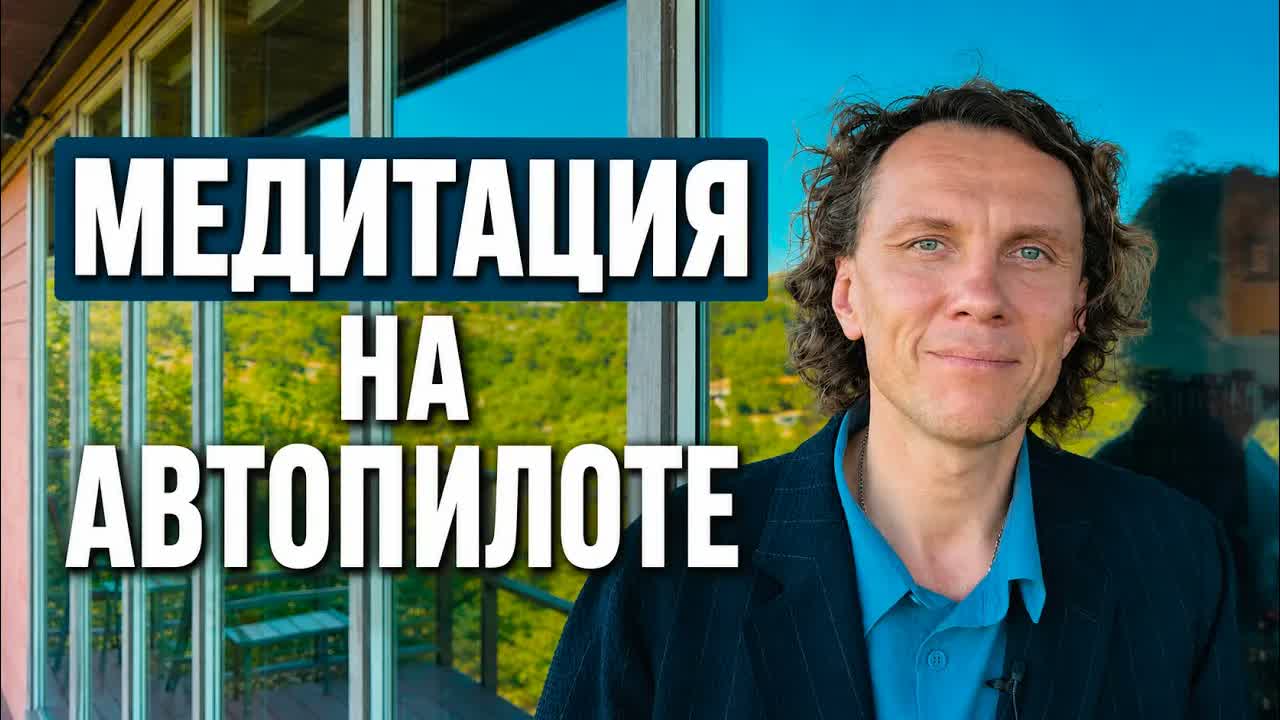
VideoPersonal developmentSep 9, 202621:46
Why We Misjudge People | Seeing Yourself and Others More Broadly
Alexander Volchek
Why do we draw conclusions about people so quickly and get them wrong so often? Sometimes appearance, a role, a single action, or a state of mind is enough for us to decide what kind of person is in front of us.
Main subjects
Alexander VolchekExpanded perceptionAwareness, observation, and perceptionIdentity, masks, and other people's expectationsThe social maskCouples and healthy relationships
The main question
Why do we draw conclusions about people so quickly and get them wrong so often?
What you can take away
- In this video, Alexander Volchek examines how our ideas and habitual roles affect relationships and what it means to truly broaden our perception of others, so we can avoid misjudging people and strengthen relationships.
- After watching, you will be able to look differently at your own judgments of people, notice where you jump to conclusions, and better understand what may lie behind another person's states, actions, and behavior.
Main threads of the conversation
- 00:00How appearance affects our perception of a person
- 02:53How we create different versions of ourselves for others
- 04:20How masks and roles become part of our personality
- 06:40Why people do not know themselves
- 09:42Are you being yourself or playing the role society expects?
- 11:08Clothing and status: how they narrow our perception of a person
- 16:03How to stop labeling people
- 19:12What it means to broaden our perception of another person
- 20:23How to learn to see another person more broadly
Claims made here
Individual claims identified in the material: who said them, when, and what kind of thought they express. Each timestamp opens that point in the video.
- 01:01
My wife always wears makeup. She may skip anything else, but not putting on makeup. That never happens.
Alexander Volchek
- 02:01
My wife never takes pictures with filters, but recently she showed me something: “Sasha, did you know you can see on Instagram that a woman has used a particular filter?”
Alexander Volchek
- 02:44
Olya, and everyone watching, I am certainly not saying you should not do it.
Alexander Volchekprinciple
- 06:36
To stop pretending to be someone, you first have to understand who you actually are.
Alexander Volchekprinciple
- 07:28
I can remember getting a haircut two weeks or a month ago.
Alexander Volchek
- 11:05
I still would not go to such a meeting in shorts, because I do not go anywhere in shorts.
Alexander Volchekcause
- 12:02
Imagine I did that and someone photographed me and said, “He is just some fool trying to stand out and show he is different.”
Alexander Volchekcause
- 12:02
If they establish a dress code that specifically requires flip-flops, of course I will wear them. But there has to be a dress code.
Alexander Volchekprinciple
- 12:53
There were tables, one with food, caviar and sandwiches with caviar.
Alexander Volchek
- 13:46
He said, “One new thing I would like…” Everyone sat down at the table. That day, they were approving a document describing how the board would operate.
Alexander Volchek
What to pay attention to
- How appearance affects our perception of a person
- How we create different versions of ourselves for others
What to watch next
- How You Affect Other People Even When You Say Nothing to Them
- Why Meditation Calms You Today and Irritates You Tomorrow
Who this is for
- For readers interested in: Awareness, observation, and perception, Identity, masks, and other people's expectations, Couples and healthy relationships
Explore further · 17 mentions
Who and what is mentioned
People
4- Alexander Volchekparticipant
- Wifementioned
- Husbandmentioned
- Olga Stolyarovamentioned
Companies and products
5Places
1- Silicon Valleymentioned
The author's terms
4- Expanded perceptioncentral subject
- The social maskcentral subject
- The human spiritual systemdiscussed
- Silicon Valley as a business environmentmentioned
How it connects
How it connects
Size shows how fully the subject is discussed; a dashed line means a contextual connection, without a direct quotation. Select a point to open its page.