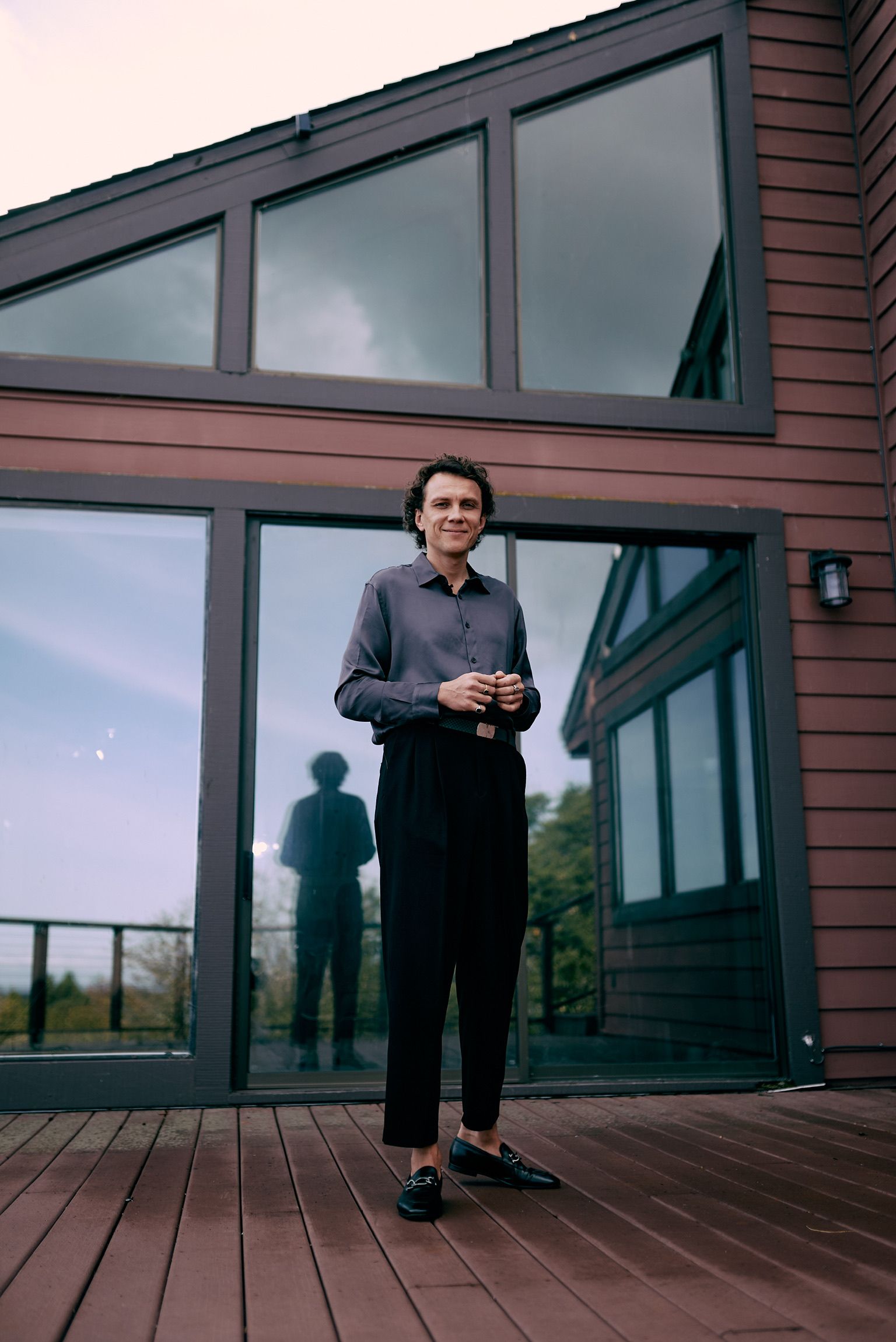
Since 2005, I have been creating, managing, and scaling technology companies and platforms. I created the largest technology platforms in IT education, business education, and agro-industry. I developed and implemented software, ERP systems, and automated semiconductor equipment for companies in the US, Germany, France, England, and Taiwan.
- Details about Partnership
- About Technologies, IT
- About Current Business Interests
- Learn about mentorship, Advisory: Mentorship
Major tech businesses and projects in my professional background: GeekBrains, AGRO24, Biznes Molodost, Megaplan, iTec group, Mecasoft. More details about these businesses here: Businesses - IT Field.
Below are my thoughts, views, and descriptions regarding technologies and IT.
My Path in Technology
I truly got closer to technology when I started working as a programmer in a French company in 2004. Even as a child (from 1992), I had a computer (a 286 Pentium), and I loved everything related to it—games, networks, and creating various things. Later, this hobby transitioned into a professional sphere, where I worked as a programmer and eventually managed hundreds of projects.
Once in Minsk, I was stopped by a traffic officer. He looked around the car for a long time and said, “You look like some kind of spy.” At the time, I had a lot of wires and circuit boards in my car because I was testing navigation tracking systems for a major freight operator, a French company called Intercars, right in my car.
I began participating in large international projects (in 2004, at MecaSoft) in France, Austria, Germany, Taiwan, the US, and the UK. I worked with experienced professionals and quickly got into project management. Together, we conceived both equipment and different types of software. Many projects were related to the semiconductor industry. Equipment installation and robot management took place in various countries, including Silicon Valley (USA). I first arrived in Silicon Valley in 2007. We carried out many projects in the States, including in Portland, Oregon. I persuaded a senior project manager to go to California to see how things were arranged there.
At university, I fell in love with the database management systems course, particularly normalization. I still use those principles all the time. I can break down any business or process into details, describe it, normalize it. I can do this better than almost any systems analyst. No programmer would do it this way. Why? Because I approach it with business experience and knowledge, from a broad perspective and mindset. I understand what is needed. Imagine a good gardener who knows how to plant, but someone has to determine which plants are needed, for what purpose, and when to plant them. As an architect, you build it.
As a technological architect of businesses and products, I understand why people need these things and how to use them. I have implemented thousands of different systems, know a huge number of things, and can create what’s needed myself. It’s not hard for me to launch a website or set up an email marketing system with various touchpoints and triggers. I know how it works. Do I want to do it? Of course not. I don’t need to. I know how to set parameters, understand marketing, write texts, know how to interact with customers, and handle sales. I possess a huge number of these qualities. Some I do better, some worse. Many things I can’t do or can’t do very well. Then I know whom to involve to do it better.
Why Technology?
I like technology. I find it easy to understand, to dive in, and I see the scale. It’s full of huge possibilities. Why am I in the tech world, why am I in AI, and why in the Valley? Because I know the world is developing rapidly. For example, artificial intelligence is something different, like the advent of electricity, computers, or the internet. It’s big, it’s important, and we need to pay attention to it.
Technology is also important in my life. I interact with it. Large businesses without technology are unrealistic, or you simply don’t understand them. If you’re a leader and don’t understand technology, you should admit it. Most leaders know only abstractions and say, “The main thing is to manage the team, hire people.” But what if you can manage, understand finance, hire talent, and also know technology? What if you’re very strong in all these areas and can figure things out easily? For you, it’s natural, free, and easy. “No, that can’t be! It’s impossible!” But it’s possible.
Significance and Influence
When I did automation in my dad’s pharmacy, it was significant for me. It was my point of realization that as a programmer, you can act as a programmer, a business analyst, and a project manager.
Certainly, there have been many projects I can call significant in my life, as “significant” means they influenced me greatly. Did it influence me when I automated the entire accounting system at one of Europe’s largest transportation companies (Intercars) while I was still a student? Did it influence me that together with my director (Mecasoft, TMITech), standing at a train station in Paris at night, we came up with a new design system for robot operators (a large reticle storage for the semiconductor industry)? Did developing and implementing automation (a full ERP system) for a furniture company influence me? Did another 300 or 400 large-scale projects influence me? Of course! Each of them was meaningful in my life. I’m incredibly glad I managed to do so much myself.
More examples of different projects:+
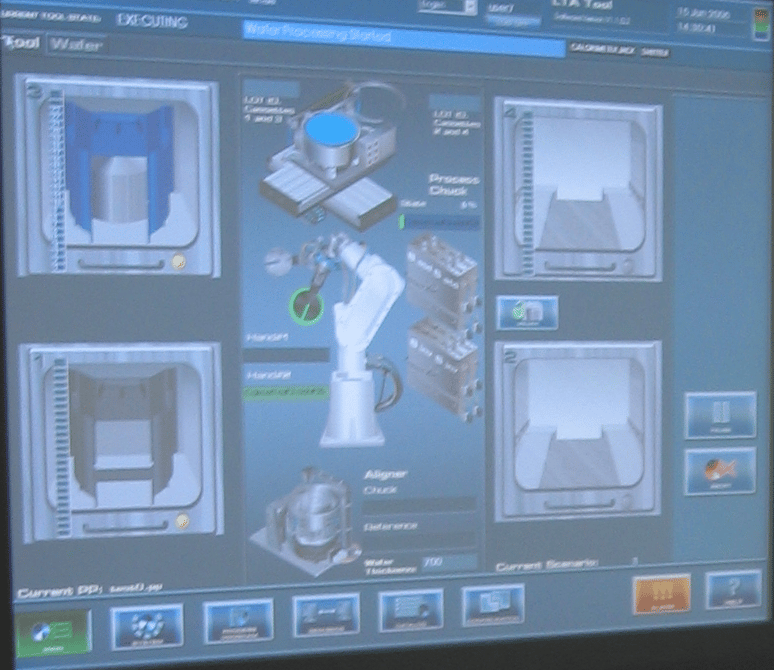
Projects related to robots: In 2004, they brought me my first robot. This robot handled the movement of silicon wafers used to manufacture processors. The robot came from an Intel factory. I was impressed by the code, which had comments in Chinese, French, German, and English. I made corrections to this code to fix errors or implement new tasks.
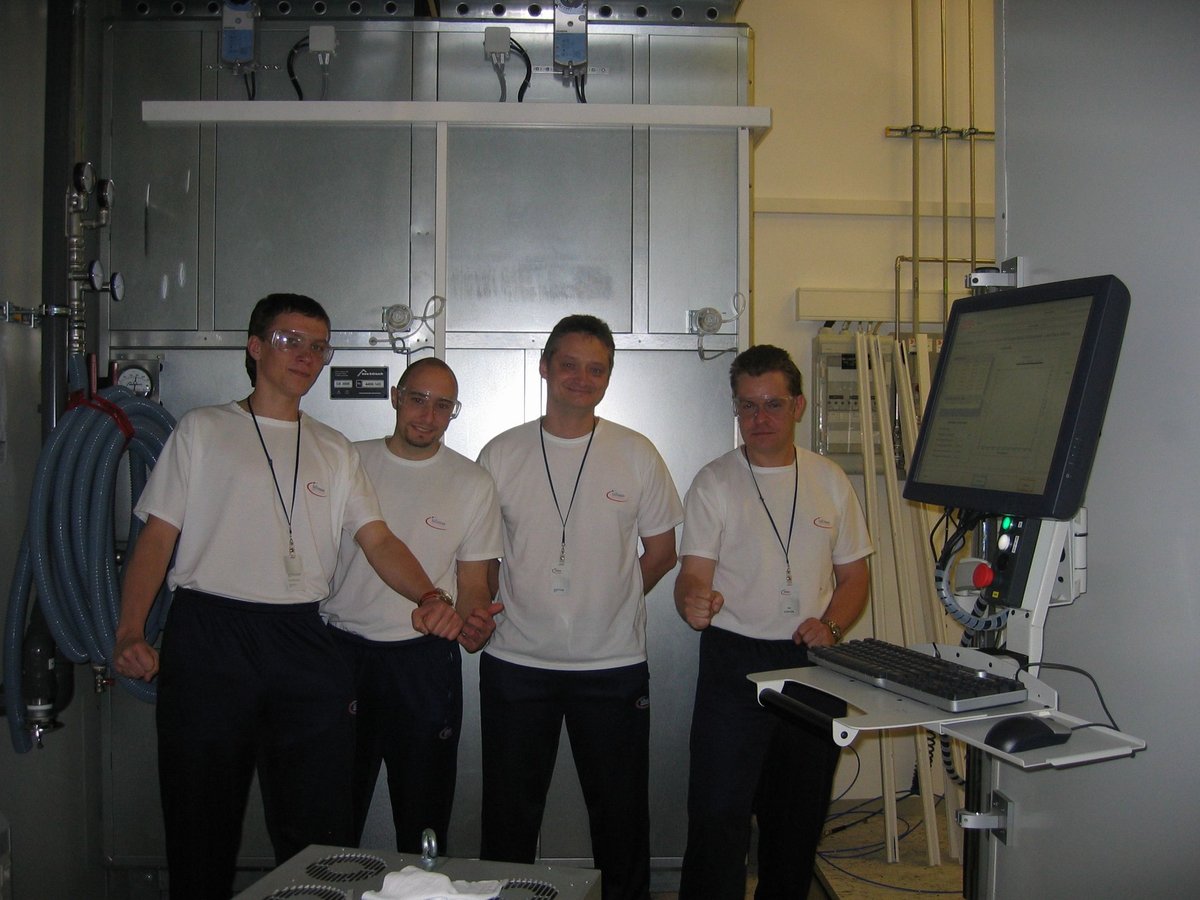
Another major project we did together with a team from France involved a robot from Germany, with Infineon in Austria as the client. The Infineon factory was incredibly beautiful. I particularly remember the cafeteria: giant windows (about 10 meters tall), all glass, located on the 2nd floor, surrounded by mountains. There were 5 menu options, everything looked unreal. This was in 2005. I recently visited Google’s cafeteria, and Infineon’s was much cooler. Infineon and that robot setup were something unique. It wasn’t just a robot but an entire room full of equipment. We linked all this equipment together, and I actively participated in the process. I have a photo from that room—though photography was forbidden—I loved shooting videos at these factories. These were high-cleanliness-class factories, with very few dust particles per cubic meter. You had to wear special white clothes and go through decontamination. Robots moved along the ceiling and the floor, and you moved around the factory performing various tasks. That factory was very interesting.
Another interesting project was in Taiwan. We built a robot for storing reticles, 200-300 units in total. Each reticle cost $100,000. They are used in the process of making processors. This was a very serious matter—no mistakes allowed. It was an exciting project.
We were the main people responsible for this project. I was the main person in charge of installation. The equipment cost tens of millions of dollars, and I was the project manager for the technology part. Interaction with project managers from Taiwan, France, and other countries was extensive.
Transportation tracking was one project I remember well because I myself did automation for a transportation company. It was one of my first projects involving financial accounting and ticket printing. Later, we created one of the first e-ticket systems for a company called Place Buy in 2009-2010. It was very memorable.
There were many other projects that left a mark. We worked with England, creating a content authoring tool system in EdTech, doing programming for that software. There was a big conflict with the client; they didn’t want to pay. Eventually, of course, they paid everything.
I also remember the Megaplan project. It was a new business for me, a new approach to software development, especially regarding design—though we were among the first in the world to launch a visual 3D design of equipment. I believe that equipment still operates in factories. It was fascinating to work on it. I’d love to see how what we created works now.
Large technology projects were also done for “Biznes Molodost.” We did serious work on creating a technology platform and automating the company. We had one of the best Salesforce implementations in Eastern Europe in terms of CRM. I understood CRM deeply, and it stuck with me. I loved automation, automation of enterprises.
Before that, we automated an insurance company, created a large product for automating lease relations, and automated furniture manufacturing plants. I remember all these projects very well—what technologies were used, how they were implemented, discussions with owners, signing contracts.
AGRO2424 is perhaps the last and biggest technological breakthrough I made. Since 2006, I had not seen such large and complex technology solutions in Russia. I was deeply involved in the project; I wrote many technical specifications myself. There were 1,000 tables in the database, I knew each one by heart and worked on them together with programmers. This was my big foray into UX/UI and technical specifications. We wrote a huge number of specs, developed a lot in marketing and internal sales systems, fintech, and integrations.
The projects were large-scale. When we agreed to create a unique integration with Tinkoff Bank, I worked on it together with their vice president. I simultaneously held discussions at a big-business level and worked out technological solutions myself.
At GeekBrains, there was a significant technological breakthrough, especially in education. We launched a unique program to train engineers that will be meaningful in the future. There is nothing like it in the world—no such educational methodology. But in any case, it introduces certain technological elements and requires platform development. New educational platforms will appear in the world, very different from the current ones.
There were many other large projects and countless different tasks.
Impact on Global IT
I don’t think I have contributed to global IT in the sense of creating projects that are central or unique on a world scale. There were projects in specific industries or at the national level, but not globally. That’s why it would be interesting to create something large-scale with global impact. That’s interesting.
Inspirational Ideas and Projects
Technology projects are not my source of inspiration. My sources of inspiration lie elsewhere. There are companies I like, for example, Apple, but that doesn’t mean they inspire me to take specific actions or steps. It’s important to me, but not a source of inspiration. In some part, of course, they are. I’ve drawn and continue to draw interesting solutions from interesting companies. But my inspiration in terms of working in the tech field, doing projects, multitasking, and my entire management system definitely doesn’t come from these companies’ inspiration. On the contrary, it’s an opportunity for me. I see that we can do even more and differently. I see that the world is structured in various ways, and it’s an illusion to think everyone knows how it’s arranged and what it really is.
Influence of Technological Activity on Life
Technological activity definitely influenced my life, since I apply technology everywhere. It affected many decisions, my professional sphere, and my work.
My first job was related to software development. I had a business in software development. Then I managed a company that sells B2B software. Later, I was in companies where I applied technology to grow the business. By knowing technology and being able to automate processes, you boost business tremendously. You become a different kind of person. Those who don’t understand it can’t even be compared to you. You’re entirely different in terms of decision-making.
As they say: a programmer can become a teacher, but can a teacher become a programmer? Not so easily. I’m not comparing who’s worse or better, but the fact remains. If I understand database normalization, then I understand it. Can I figure out how to create Reels? Yes, I can. But can a person who knows how to create Reels at age 40 figure out database normalization? It’s very difficult, almost impossible, requiring a lot of work and passing through certain stages. But of course, it’s possible.
So it definitely influences life. Then I had another business related to IT, then a business in education, and now I’m focused on AI.
This gives completely different opportunities. When I interact in the market, I can easily hold a conversation with any CTO, since we have a common ground. I’m interested in that area. At the same time, I can easily switch and discuss family. I have many points of intersection, and that’s important. It affects everything. It doesn’t mean you can’t live without it. You can, and many do so successfully. But in my life, it was of fundamental importance.
Technological Future
The future in terms of technology is unknown. I think we are in a state of uncertainty, meaning anything can happen. I don’t think people reading this text now, in the first half of the 21st century, will see technology where people live on different planets or travel in spaceships. It’s unlikely.
With the development of technology, we will get completely new progress, new features and opportunities previously unavailable. This will pose complex choices and create many problems. People will have to change, seek values in other things, understand what’s truly important.
Many today rejoice that children spend time with computers or VR headsets. But for me, the key question is—where is the person in this world? What is the meaning of technology? How will I, as a person, behave toward other people? How will another person in a headset interact with those around them? I wouldn’t want everyone to wear headsets all the time.
Maybe they can be useful as a supplementary tool, but the question is—can we feel comfortable without them? I can sit quietly on a couch for 3.5 hours staring at a single point. But can I feel equally calm without a headset, headphones, or other devices? If yes, then great. No problem. What matters is what we feel inside ourselves at that moment. Are we using AI as an opportunity for life, growth, and creativity, or are we becoming its slaves, unable to do without it? Has it become our inner voice, our psychologist, or just a tool telling us what to do? There’s a big difference there.
Recently I heard someone say his daughter uses AI to ask for advice about problems with classmates. The issue isn’t that she asked AI, but what comes next? It’s just a small tool you can turn to, but you can also ask dad or mom, friends, a psychologist, or find answers in a book or from other people’s examples. Is she becoming a hostage to this technology? Is it completely absorbing her? Is she living under the illusion that her actions are correct? Does she understand what it really is?
If technology or AI becomes an addiction for a child or an adult, that’s a problem. If a person starts losing themselves without it, that’s also a problem. It doesn’t matter whether we took away their books, phone, or something else. What matters is feeling neutral, maintaining a state of observation. Sometimes feeling bad or good is natural and normal. But it shouldn’t turn into an addiction that leads to suicide, aggression, or egotism.
The market will develop very actively, and we’ll see a lot of new projects and amounts of money never seen or imagined before. If 15 years ago someone had said that companies with valuations over a trillion dollars would appear, no one would have believed it. But they exist. This is also partly why I’m so actively interested in technology.
IT Skills
Due to specialized education and career paths, I’ve always been closely connected to the IT sector. The skills acquired throughout my career enable me to create my own management methodologies for implementing projects of any complexity in IT and other businesses. I know how to create new products as well as manage existing ones:
My Own Technological Breakthrough
I don’t yet have a clear understanding of what technological breakthrough I want to achieve. In this area, I haven’t found answers yet. But it must be something entirely new. I can mention directions like interacting with a different volume of funds or establishing an educational community, but in the field of tech companies, I have no clarity yet.
Why no clarity? Because what will happen is an opportunity that doesn’t exist yet. This company or type of technology doesn’t exist yet. It will come.
Advisory and Investor Role
I act as an Advisory in companies. I help startups and established businesses solve strategic tasks in various IT fields. You can come to me for professional advice or to cover certain competencies. More about Mentorship.
I also act as an investor in some projects. I invest in a strictly limited number of projects, providing them with significant attention.
Major tech businesses and projects in my professional career: GeekBrains, AGRO24, Biznes Molodost, Megaplan, iTec group, Mecasoft. Detailed descriptions here: