VideoMeditationOct 2, 202615:20
What Happens to You While You Sleep? | A Spiritual View of a Night's Sleep
Alexander VolchekOlya
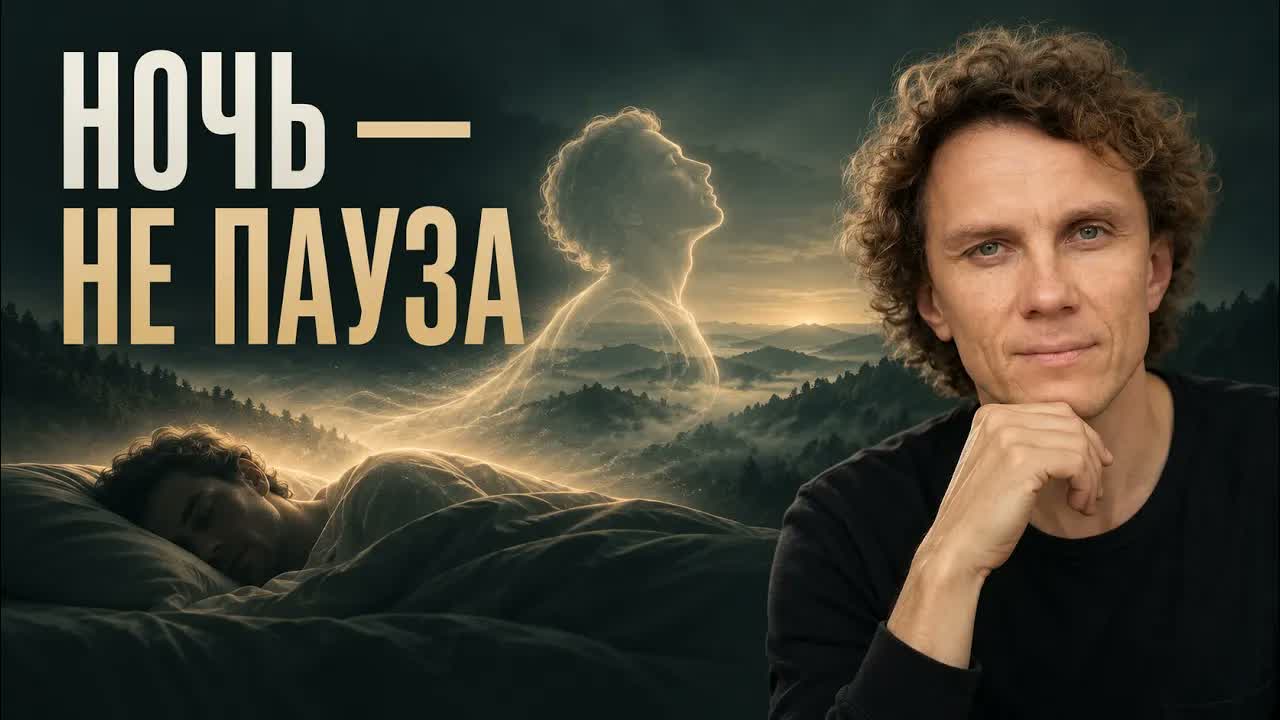
What happens to a person during sleep in terms of their spiritual system, and where is their consciousness at that time?
Main subjects
Alexander VolchekOlya (meditation channel participant)Spiritual development and the spiritual pathThe human spiritual systemAwareness, observation, and perceptionSpirit
The main question
What happens to a person during sleep in terms of their spiritual system, and where is their consciousness at that time?
What you can take away
- In this video, Alexander Volchek explores why conversations about dreams so easily turn into fairy tales, even though people spend most of the night unconscious.
- This episode is about taking a broader view of sleep and the night, beyond ready-made interpretations and familiar descriptions.
Main threads of the conversation
- 00:00What happens to a person during sleep
- 00:15Why conversations about dreams resemble fairy tales
- 02:16Exercise: the third of our lives we overlook
- 03:21What to understand about the night before interpreting dreams
- 05:46Can dreams be interpreted? A dream or intuition?
- 07:31What happens to the spiritual bodies at night
- 10:14Are you really in control of yourself?
- 11:38If you do not hear the world by day, how will you perceive the night?
- 13:12Can the astral body be called a body?
Claims made here
Individual claims identified in the material: who said them, when, and what kind of thought they express. Each timestamp opens that point in the video.
- 00:15
Dreams provoke a great deal of discussion in people's lives, of course, because they seem unreal in one sense, exotic.
Alexander Volchekcausecomparison
- 00:15
That makes them interesting to talk about: how you flew, traveled, or moved around.
Alexander Volchekcause
- 02:19
I would not say, "I was in these countries at night, in those countries at night."
Alexander Volchek
- 04:59
People often come to me and say, "We had a particular dream, and this is how it is interpreted."
Alexander Volchek
- 05:57
"I heard this," "Someone said it," or "I read it somewhere." I always recall Rudolf Steiner, who said that, as a rule, you cannot interpret any dreams at all.
Alexander Volchekprinciple
- 06:52
Interpreting dreams is not merely unnecessary, useless, or potentially misleading for a person. It also leads them away from genuinely serious observation of what happens at night.
Alexander Volchekcause
- 08:39
Whether they can consciously rise up from the physical world and somehow transform all these systems is a very big question.
Alexander Volchek
- 10:39
It is not as though I walk around controlling it and deciding what to do or not to do.
Alexander Volchekcause
- 11:35
That is why the first focus of attention I mentioned, the exercise of looking back and remembering that there were nights too, recognizing that you lived through those nights, is so important.
Alexander Volchekcause
- 12:38
It does not mean something extraordinarily interesting is happening that needs to be brought out and displayed in the material world.
Alexander Volchekprinciple
What to pay attention to
- What happens to a person during sleep
- Why conversations about dreams resemble fairy tales
What to watch next
- Can Food Hinder Spiritual Development? | How Diet Affects Perception
- Why We Misjudge People | Seeing Yourself and Others More Broadly
Who this is for
- For readers interested in: Spiritual development and the spiritual path, Awareness, observation, and perception, Spiritual traps and risks
Explore further · 12 mentions
Who and what is mentioned
People
3- Alexander Volchekparticipant
- Olya (meditation channel participant)participant
- Rudolf Steinerdiscussed
Places
1- Europementioned
Technologies
1- Artificial intelligencementioned
Concepts
4- Spiritdiscussed
- Awarenessmentioned
- Meditation
- Incarnationmentioned
The author's terms
3- The human spiritual systemcentral subject
- Expanded perceptiondiscussed
- Free willmentioned
How it connects
How it connects
Size shows how fully the subject is discussed; a dashed line means a contextual connection, without a direct quotation. Select a point to open its page.