VideoPersonal developmentDec 3, 202537:15
Why Is It So Hard for You to Say “No”? The Real Reason No One Talks About
Alexander VolchekAnna VolchekUnidentified participant
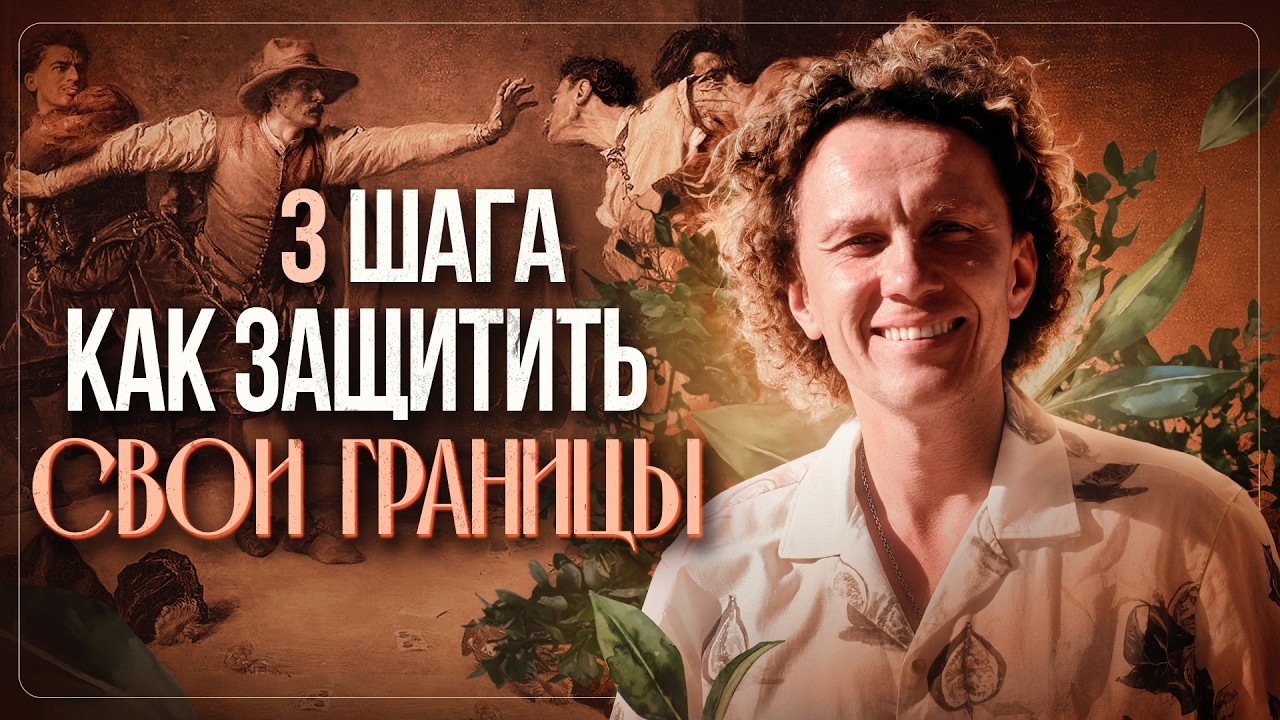
How do you stop being so accommodating? Why are we afraid to say no, even when we should protect our boundaries? This is one of Alexander Volchek's most in-depth videos on inner confidence, perception of life, and maturity.
Main subjects
Alexander VolchekAnna VolchekBoundaries, expectations, and the right to be yourselfThe right to say noIdentity, masks, and other people's expectationsAwareness, observation, and perception
The main question
Why are we afraid to say no, even when we should protect our boundaries?
What you can take away
- In this video, we examine: – where the fear of refusing comes from; – why we can say no to some people but not others; – the connection between insecurity, trauma, past experience, and social pressure; – why "just say no" techniques don't work; – what real awareness is and how it helps us make the right decisions; – how to stop being so accommodating without becoming selfish; – what to do if you always give way in relationships, in your family, or at work; – a key practice that changes everything; – how to see the purpose, distinguish the parts of your life, and make decisions from broad awareness.
- Subscribe to the channel, watch the videos, ask questions, and share your thoughts in the comments.
Main threads of the conversation
- 00:00Introduction
- 02:40Are there situations where a person should NOT say no?
- 03:10The first key step: learning to distinguish situations
- 06:13Awareness as a solution to the fear of refusing
- 06:30An example: feeling uncomfortable telling a server you didn't like the dish
- 08:13The main reason people are afraid to say no
- 10:13Insecurity that creates a fear of refusing
- 11:30Why the "just say no" technique doesn't work
- 15:10One solution that changes everything (the key moment)
- 19:56Take a pause: a practical tool
- 21:03Broad awareness in different areas of life
- 24:11The point is making the right decision, not saying no
- 25:55There are places where you will never be able to say no
- 28:22What does being yourself mean?
- 30:10Being ready for any event in life: the highest form of perception
- 31:31Why there is no universal advice on saying no
Claims made here
Individual claims identified in the material: who said them, when, and what kind of thought they express. Each timestamp opens that point in the video.
- 07:14
Again, I understand that I tell them, Anya, not because they are bad people or because I feel negatively toward them, but because it is my opinion and it is legitimate.
Alexander Volchekcause
- 13:36
Here is an important part of this for a person: again, on one hand, in the social world you do need to be able to manipulate and simply take actions, even actions you are not naturally inclined to take.
Alexander Volchekrecommendation
- 19:24
That is why I often recommend something in situations where, for example, a person knows that they always have a conflict with their boss and freeze up.
Alexander Volchekcause
- 26:49
When a person perceives everything happening, understands cause and effect more broadly, understands and perceives it more broadly rather than abstractly, it gives them a confidence, Anya, that cannot be found anywhere else.
Alexander Volchek
- 29:59
Alcohol narrows perception, which is why people so often become alike and do the same things together in a group: everyone starts talking or making friends.
Alexander Volchekcause
- 30:24
They stop being themselves. Anya, take that same lion: I want to tell you that if you remain yourself and remain human, the lion will most likely never approach you.
Alexander Volchekprinciple
- 32:27
You are open to it, understand that things can unfold differently, that you may behave in different ways, and that it is impossible to be a hundred percent prepared, as people normally want to be.
Alexander Volchekrecommendationdefinition
- 33:29
Some people will never in their lives, never in their lives, learn to say yes across a whole range of things, and they don't need to learn.
Alexander Volchekrecommendation
- 37:09
Your partner, acquaintances, bosses, employees, or colleagues say, "Wait, we could do it that way?" If there are things left unspoken in your relationships with some people, it is a question about those relationships.
Alexander Volchekrecommendation
- 37:40
The problem, Anya, is that people don't want it to be forever.
Alexander Volchek
What to pay attention to
- Introduction
- Are there situations where a person should NOT say no?
What to watch next
- How can you assert your boundaries and respond to negativity?
- The “Next Step” System: how to make decisions without doubt and fear
Who this is for
- For readers interested in: Boundaries, expectations, and the right to be yourself, Identity, masks, and other people's expectations, Awareness, observation, and perception
Explore further · 30 mentions
Who and what is mentioned
People
12- Alexander Volchekparticipant
- Anna Volchekparticipant
- Friend / friends
- Partnermentioned
- Childrenmentioned
- Mom / mothermentioned
- Wifementioned
- Daughtermentioned
Companies and products
1- Instagrammentioned
Places
1- San Franciscomentioned
Concepts
14The author's terms
2- The right to say nocentral subject
- A conscious decisionmentioned
How it connects
How it connects
Select a subject to explore it.